Chapter 12 · Les Fonds
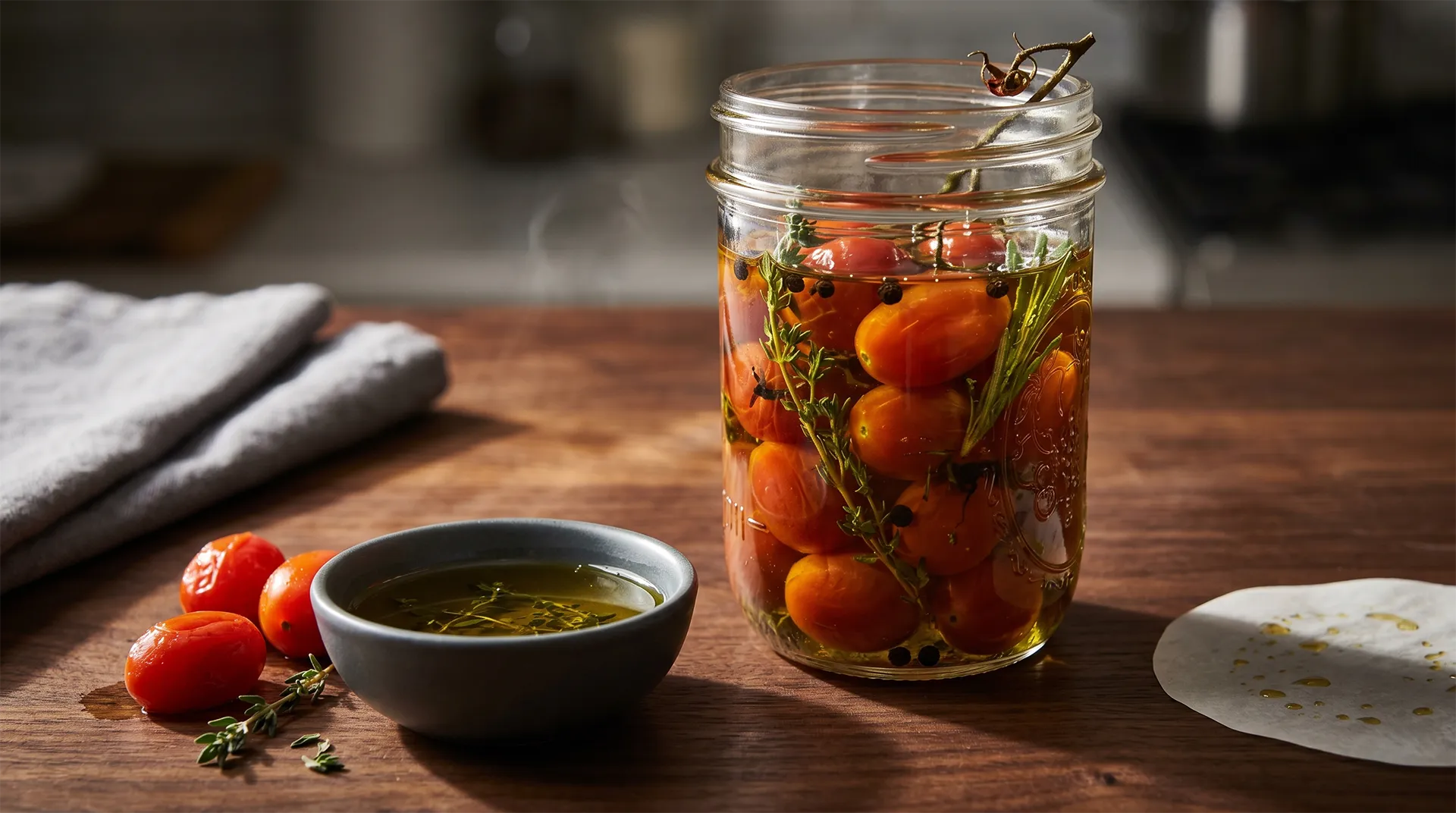
Confit Tomatoes & Herb-Infused Oil
A dual-purpose larder build featuring velvet-textured peeled tomatoes and a highly aromatic, vine-infused extra virgin olive oil.
Yield: ~500 ml oil / 2 pints tomatoes | Prep: 20 min | Cook: 10 min | Inactive: 2–4 hr | Total: ~3–5 hr
Headnote
This preparation transforms humble cherry tomatoes into a luxurious garnish while simultaneously creating a “mother oil” for the larder. By utilizing the tomato vines themselves, we capture the fleeting, garden-fresh aroma often lost to high-heat cooking — the same green, sun-warm quality you smell when you brush past a tomato plant in the garden.
Teaching Idea: High-Peak Infusion. By heating the oil to 250°F/120°C and immediately removing it from the heat, we trigger a rapid release of fat-soluble volatiles from the woody herbs and vines before the oil has time to oxidize or the aromatics have time to scorch. The carry-over heat then finishes the extraction during the slow cool-down, producing a deeper, cleaner aroma than a sustained low simmer.
Ingredients
The Aromatics
- 500 ml (2 cups) extra virgin olive oil, high quality
- 4 sprigs fresh thyme
- 2 sprigs fresh rosemary
- 5 g (1 tsp) whole black peppercorns
- Reserved tomato vines (from the fruit, below)
The Fruit
- 500 g (approx. 2 pints) cherry or datterini tomatoes, on the vine
Mise en Place (Action Checklist)
- Score the tomatoes: Use a sharp paring knife to cut a shallow star or “X” on the blossom end of each tomato.
- Prepare the baths: Set one pot of water to a rolling boil and prepare a large bowl with ice and water.
- Strip the vines: Remove the tomatoes from the vines but reserve the vines. Wash and pat them completely dry to prevent oil splatter.
- Cut the cartouche: Prepare a parchment paper circle to fit the diameter of your infusion pan.
- Sterilize the storage jar: Wash a glass jar (with lid) in hot soapy water, rinse, and dry in a low oven (200°F/95°C) for 10 minutes. Cool before filling.
Method
Phase 1: The Concassé Prep.
- Submerge the scored tomatoes in the boiling water for 20 seconds. Immediately transfer to the ice bath to stop the cooking.
- Once chilled, peel the skins starting from the scored “X” and discard the skins.
- Sensory Cue: The skins should wrinkle and pull away easily without the tomato flesh becoming mushy. If they resist, return the tomato to the boil for an additional 5–10 seconds.
Phase 2: The Infusion.
- In a heavy-bottomed saucier or small Dutch oven, combine the extra virgin olive oil, thyme, rosemary, peppercorns, and the dry tomato vines.
- Heat the oil over medium heat until it reaches 250°F/120°C. Sensory Cue: Aromatics will release a strong, woody-herbaceous perfume just before the oil reaches temperature.
- Critical Action: As soon as the oil hits 250°F/120°C, immediately remove the pan from the heat source. Holding it at temperature will scorch the herbs and turn the profile bitter.
Phase 3: The Confit.
- Gently add the peeled tomatoes to the hot oil, ensuring they are fully submerged.
- Place the parchment cartouche directly onto the surface of the oil to keep the tomatoes submerged and trap aromatics.
- Why: The cartouche prevents the exposed tops of the tomatoes from drying out or oxidizing during the long cooling period and holds the volatile aromatics inside the pan rather than letting them lift off into the kitchen air.
Phase 4: The Cooling Phase.
- Allow the tomatoes to remain in the oil until the mixture reaches room temperature (approximately 2–4 hours, depending on pan mass and ambient temperature).
- Sensory Cue: The oil will be a clear, deep green-gold; the tomatoes will look glossy and slightly slumped, with the herbs and vines visibly steeped through the oil.
- Transfer everything — tomatoes, oil, herbs, vines — into the sterilized storage jar.
Variations
Thermal Variant — The Bright Profile
This recipe defaults to a high-peak temperature for rapid extraction. However, 250°F/120°C is near the threshold where delicate aromatics can turn bitter or “toasted.” If you prefer a brighter, more “raw” garden profile, heat the oil only to 180°F–190°F/82°C–88°C and hold there for 20 minutes before adding the tomatoes. The result is greener and grassier; the high-peak method produces a deeper, almost roasted aromatic.
Chef’s Notes
Storage
Store the tomatoes submerged in the oil in a sterilized glass jar. Refrigerate for up to 2 weeks. The oil will solidify when cold; temper at room temperature for 30–45 minutes before use to restore pourable consistency.
Future Development
This recipe serves as the foundational test case for the upcoming Technique Folio — Oil Infusion Mechanics.
Glossary
- Cartouche: A round piece of parchment paper used to cover food during cooking to reduce evaporation and keep ingredients submerged in their cooking medium.
- Concassé: A French preparation for tomatoes — peeling (typically via brief blanch and ice-bath shock), seeding, and dicing.
- Confit: From the French verb confire, “to preserve.” Cooking food submerged in fat at a low temperature for both flavor and preservation.
- High-Peak Infusion: A short-duration, high-temperature extraction method that drives volatile aromatics out of woody herbs in seconds rather than minutes, then uses carry-over heat during cool-down to finish the extraction.
- Infusion: The extraction of flavor, color, or chemical compounds from plant material into a solvent such as oil or water.