Chapter 10 · Stocks, Sauces & Condiments
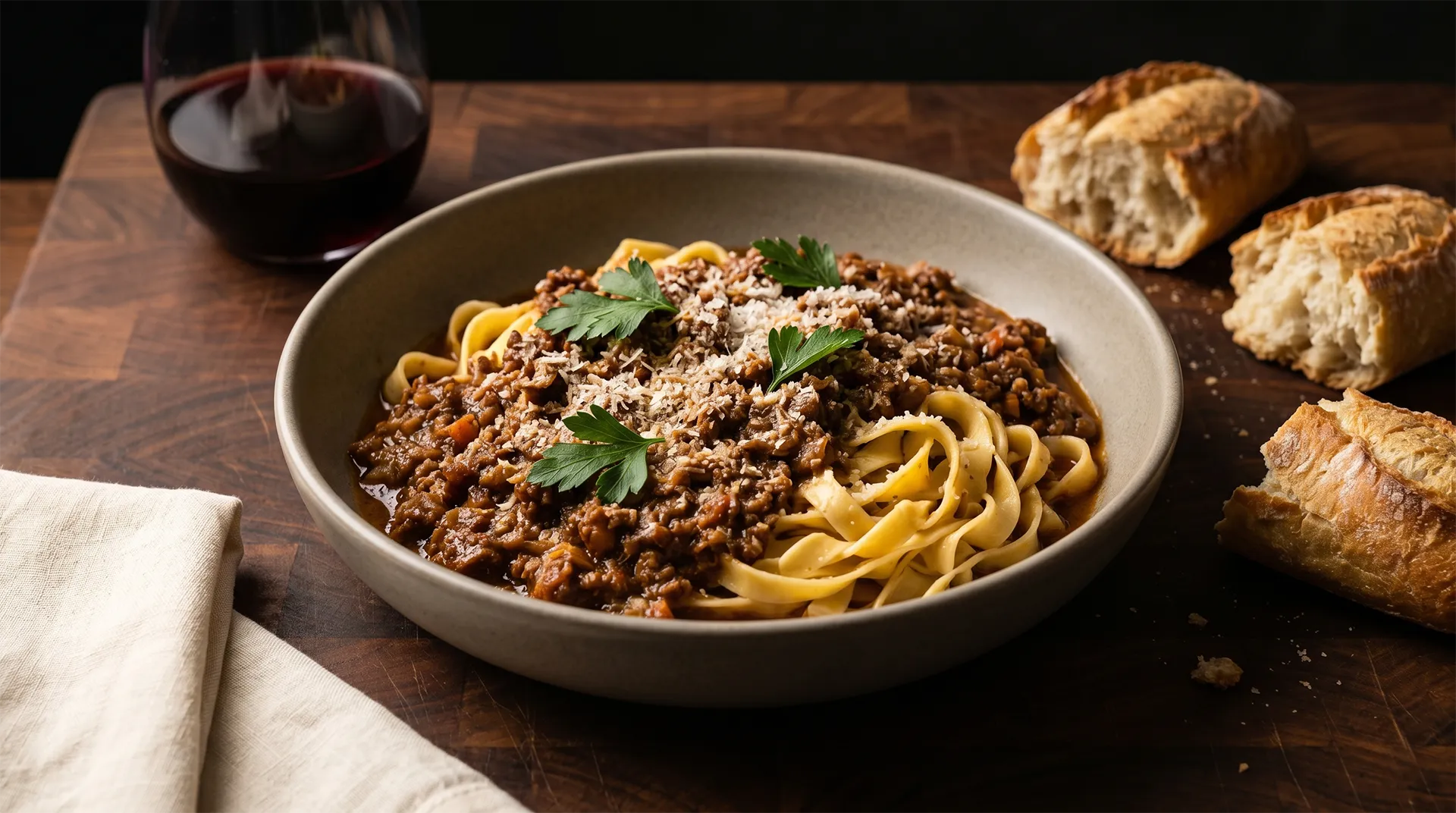
Classic Ragù alla Bolognese
A complex, slow-simmered meat emulsion defined by the interplay of milk, wine, and time.
Yield: 1.5 kg (8 servings) | Prep: 45 min | Cook: 3.5–4.5 hr | Total: ~5 hr
Headnote
True Bolognese is not a tomato sauce with meat; it is a meat sauce supported by tomato. The key to its velvet texture is the inclusion of milk, which neutralizes the acidity of the wine and tomatoes while tenderizing the protein fibers. Teaching Idea: The Maillard-Liquid Balance. Unlike a steak, we do not want a hard, crusty sear on the ground meat, which creates tough “pebbles.” We cook the meat until the water evaporates and the fat renders, achieving a gentle browning that preserves tenderness.
Ingredients
The Base (Soffritto & Fats)
- 45 g (3 tbsp) Unsalted Butter
- 30 ml (2 tbsp) Extra Virgin Olive Oil
- 115 g (4 oz) Pancetta or Guanciale, finely minced
- 200 g (1 ½ cups) Yellow Onion, finely diced
- 150 g (1 cup) Carrots, finely diced
- 150 g (1 cup) Celery, finely diced
The Proteins
- 450 g (1 lb) Ground Beef Chuck (20% fat)
- 225 g (½ lb) Ground Pork Shoulder
The Liquids & Aromatics
- 240 ml (1 cup) Dry White Wine (Pinot Grigio or Sauvignon Blanc)
- 240 ml (1 cup) Whole Milk, warm
- 60 g (¼ cup) Tomato Paste (Double Concentrate)
- 400 g (14 oz) Canned San Marzano Tomatoes, crushed by hand
- 240 ml (1 cup) White Chicken Stock or Beef Stock (Low Sodium)
- 2 Bay Leaves, fresh if possible
The Seasoning
- Diamond Crystal Kosher Salt (to taste)
- Freshly cracked Black Pepper
- Nutmeg (freshly grated), small pinch
Mise en Place (Action Checklist)
- Prepare the Soffritto: Finely dice the onion, carrot, and celery into a precise 2mm brunoise.
- Temper the Proteins: Remove ground meats from the fridge 20 minutes before cooking.
- Oven Setup: (Optional) Preheat oven to 300°F/150°C if choosing the oven-braise method.
Method
Phase 1: The Foundation (Soffritto).
In a heavy-bottomed Dutch oven, melt the butter and oil over medium-low heat. Add the minced pancetta and render slowly until the fat releases and the meat is translucent but not crisp (approx. 8 minutes).
Why: Rendering the pork fat creates a flavorful medium to cook the vegetables.
Add the onion, carrot, and celery (the Soffritto). Sweat gently for 15–20 minutes, stirring frequently. Do not let them brown; they should become soft, sweet, and pale gold.
Why: High heat destroys the delicate aromatics of the vegetables. Low and slow maximizes natural sugars.
Phase 2: The Meat & The Acid.
Increase heat to medium. Add the ground beef and pork. Break up the meat immediately with a wooden spoon or potato masher to ensure a fine texture. Cook until all raw red color is gone and the liquid released by the meat has evaporated, leaving only sizzling fat.
Sensory Cue: Listen for the sound to change from a “hiss” (steaming water) to a “crackle” (frying fat).
Add the dry white wine. Simmer briskly until the wine has evaporated completely and the scent of alcohol is gone.
Phase 3: The Lactose Emulsion.
Reduce heat to medium-low. In a small saucepan over low heat, gently warm the milk until steaming (cold liquids seize the fat). Pour in the warm milk and grate a pinch of nutmeg over the meat. Simmer gently, stirring occasionally, until the milk has evaporated and been absorbed by the meat.
Why: The milk proteins coat the meat fibers, protecting them from the acidity of the tomatoes and ensuring the final sauce is creamy, not oily.
Phase 4: The Long Simmer.
Clear a “hot spot” in the center of the pan. Add the tomato paste and toast it for 1 minute until it darkens to a brick red. Stir it into the meat.
Why: Toasting (“pincé”) caramelizes the sugars in the paste, removing the raw metallic taste.
Add the crushed tomatoes, stock, and bay leaves. Bring to a barely-there simmer (one bubble every few seconds). Cover with a lid slightly ajar. Cook for 3 to 4 hours, checking every 45 minutes to stir and add a splash of water if the sauce becomes too dry.
Phase 5: Finishing (Mantecatura).
When the fat has separated from the sauce and floats on top in orange droplets, the ragù is ready. Taste and adjust with salt and pepper. Remove bay leaves. Service Note: If serving immediately with pasta, toss the pasta with the sauce and a ladle of pasta water, stirring vigorously to emulsify the separated fat back into the sauce.
Glossary
- Soffritto: The “holy trinity” of Italian cooking (onion, carrot, celery) sautéed in fat to provide an aromatic base.
- Brunoise: A very fine dice (approx. 2mm–3mm cubes).
- Pincé: To cook a tomato product (usually paste) in fat until it darkens and caramelizes.
- Mantecatura: The process of vigorously mixing cooked pasta with sauce and fat to create a creamy emulsion.