Chapter 8 · The Field
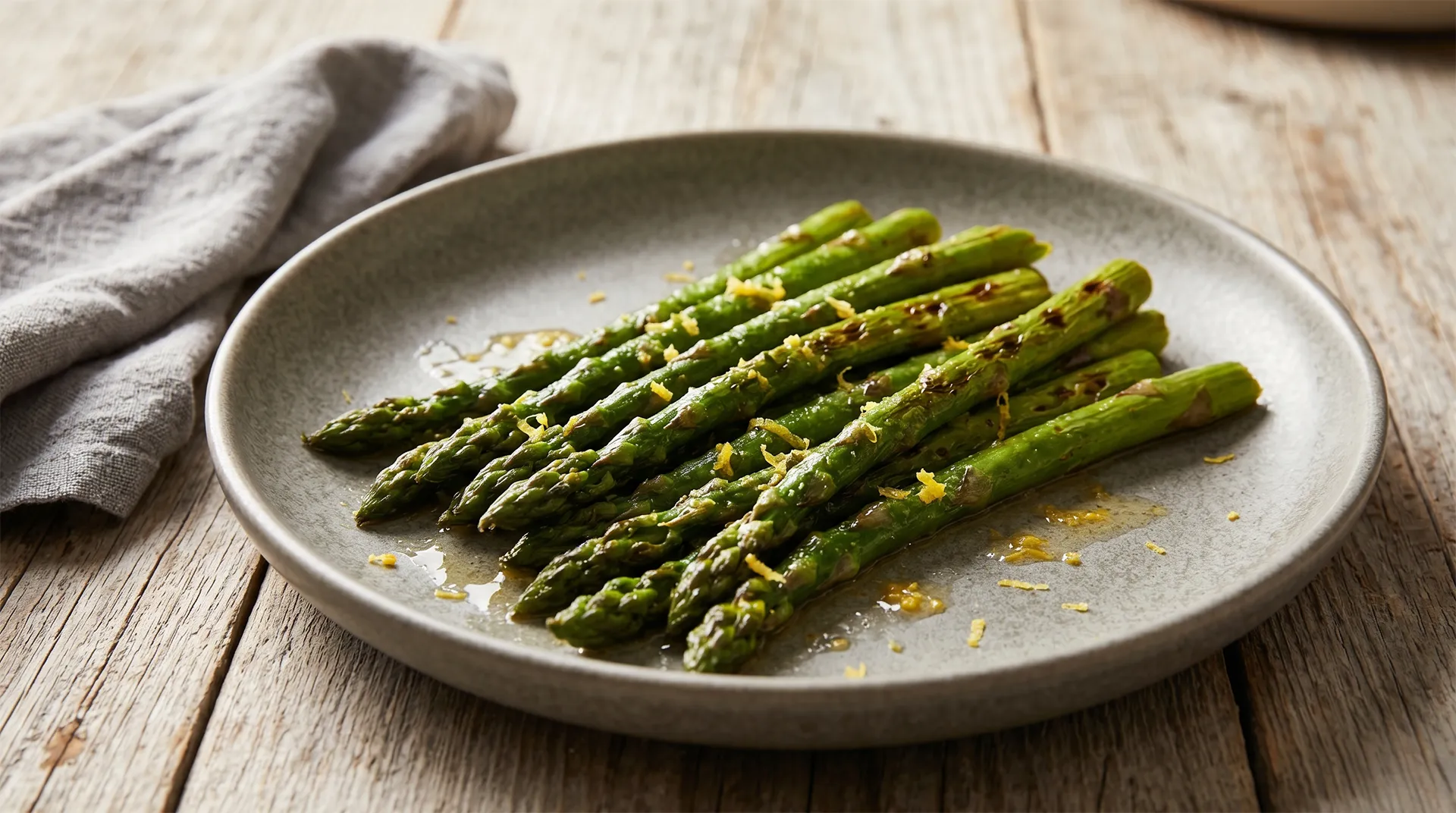
Butter-Steamed Asparagus
A vibrant, crisp-tender side dish utilizing a hybrid sauté-steam technique to preserve color and nutrient density.
Yield: 4 servings | Prep: 10 min | Cook: 8 min | Total: 18 min
Headnote
This preparation focuses on mechanical simplicity to highlight the natural sweetness of young asparagus. By starting the spears in a hot pan before covering them, we achieve a light char for flavor and a rapid steam for texture. The lemon finish is a chef’s embellishment — bright acid cut against rich butter — that elevates the dish beyond a pure side and into something worth plating deliberately.
Teaching Idea: Hybrid Cooking. Combining dry heat (sautéing) and moist heat (steaming) allows for the Maillard reaction to begin on the surface while ensuring the dense core of the spear is cooked through simultaneously.
Ingredients
The Base
- 200 g (approx. 1 bunch) asparagus spears, trimmed
- 15 ml (1 tbsp) extra virgin olive oil
- 4 g (1 tsp) Diamond Crystal kosher salt
- 1 g (¼ tsp) freshly cracked black pepper
The Finish
- 28 g (2 tbsp) unsalted butter
- 1 lemon, juice and zest
Mise en Place (Action Checklist)
- Trim the Spears: Snap or cut off the woody bottom ends of the asparagus.
- Size Consistency: If spears vary significantly in thickness, peel the lower half of the thicker spears with a vegetable peeler so they cook at the same rate as the thin ones.
- Prepare the Lemon: Zest the lemon directly over a small bowl, then cut in half for juicing.
Method
Phase 1: The Sauté
Set a wide sauté pan over medium-high heat. Add the olive oil once shimmering. Once shimmering, add the asparagus in a single layer. Season with salt and pepper. Sauté for 2 minutes, tossing occasionally. Sensory Cue: Look for very light charring or blistering on the skin of the spears and a transition to a deep, vibrant green.
Phase 2: The Steam
Add 1 tablespoon of water to the pan and immediately cover with a tight-fitting lid. Reduce heat to medium and steam for 3–5 minutes. Sensory Cue: Pull the lid when the spears are al dente — a paring knife should pierce the thickest part of the stem with only slight resistance. Why: The trapped steam transfers heat more efficiently than air, cooking the fibrous interior without burning the exterior.
Phase 3: The Glaze
Remove the lid and increase heat to medium-high to evaporate any remaining water. Add the butter. Swirl the pan constantly as the butter melts to coat the spears. Why: The residual moisture from the steam and the melting butter create a temporary emulsion that clings to the spears rather than pooling at the bottom.
Remove from heat. Add the lemon zest and a squeeze of fresh lemon juice. Toss one final time and serve immediately.
Chef’s Notes
- The Lemon: The lemon juice and zest are a chef’s addition beyond the base technique — not required, but highly recommended. The acid cuts the richness of the butter and brightens the dish considerably. If serving alongside a very rich sauce (as in 05-04 Brown Butter Confit Cod), consider omitting the lemon here since the broken cream sauce provides its own acidity.
- Thermal Carryover: Asparagus is highly susceptible to carryover cooking. Always remove it from the pan when it is slightly firmer than your desired final result.
- Thickness Variable: If using pencil-thin asparagus, skip the steaming phase entirely. A 3-minute high-heat sauté is sufficient to cook them through.
- Ice Bath (Prep Ahead): If serving later, shock the steamed spears in ice water immediately after Phase 2, then perform Phase 3 just before service.
Glossary
- Al Dente: “To the tooth”; describing food that is cooked to be firm to the bite.
- Carryover Cooking: The phenomenon where food continues to cook after being removed from a heat source due to residual internal energy.
- Maillard Reaction: A chemical reaction between amino acids and reducing sugars that gives browned food its distinctive flavor and color.
- Woody Ends: The fibrous, lignified bottom portion of an asparagus spear that remains tough regardless of cooking time.