Chapter 8 · The Field
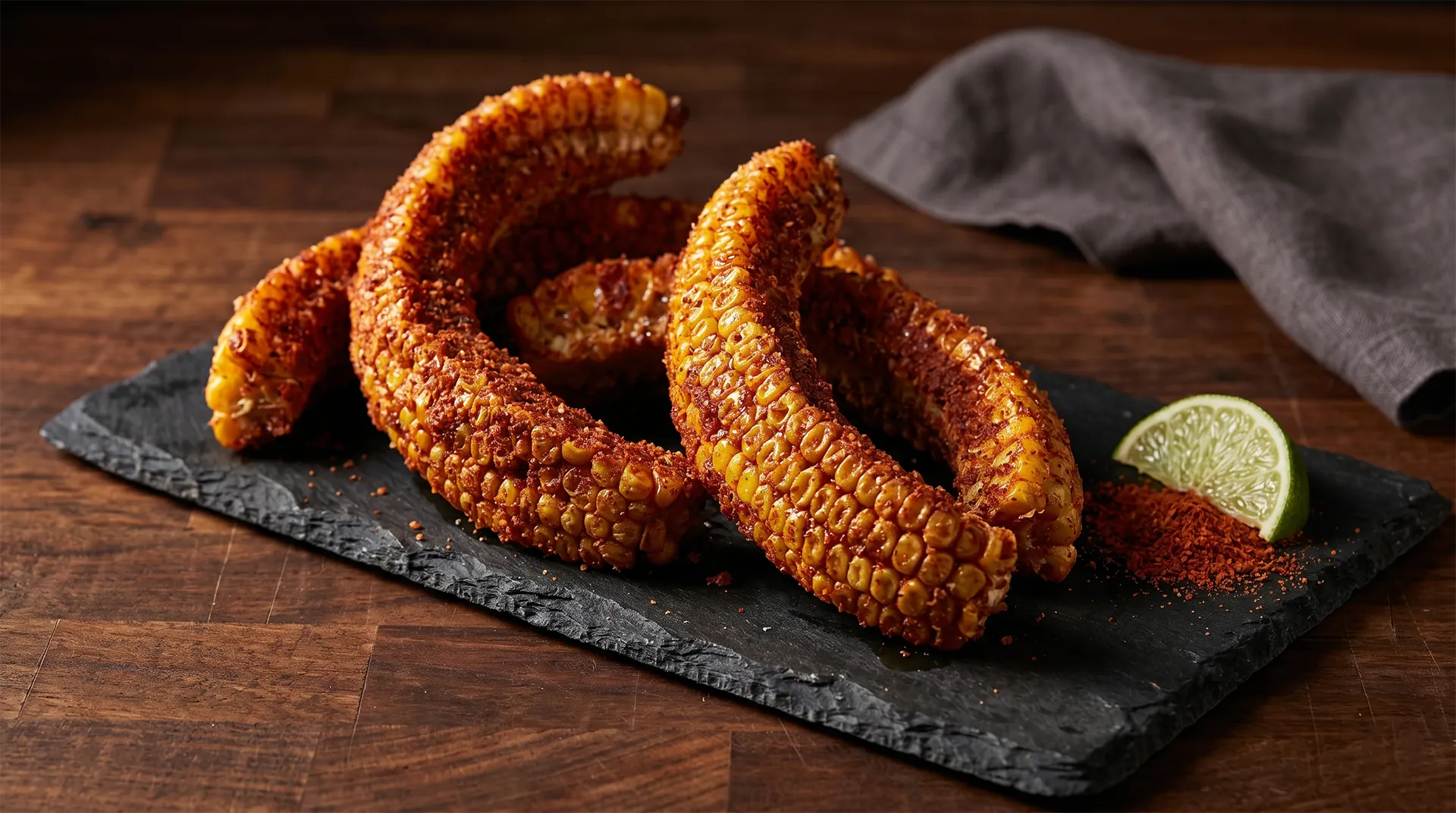
St. Louis 'Riplet' Corn Ribs
Deep-fried corn quarters that curl into “ribs,” tossed in a sweet-heat St. Louis spice blend and nutty Parmigiano-Reggiano.
Yield: 4 servings (16 ribs) | Prep: 15 min | Cook: 5 min | Total: 20 min
Headnote
Corn ribs utilize the natural structural tension of the cob’s core; when exposed to the high, surrounding heat of a deep fryer, the fibrous interior contracts faster than the kernels, forcing the segment into a dramatic arc. We finish these with a nod to St. Louis snack culture by using the aggressive sweet-and-smoky profile of Red Hot Riplets seasoning.
Teaching Idea: Differential Contraction. This is the same principle that causes squid to curl or skin-on fish to buckle; by understanding which side of a product is more fibrous or elastic, we can predict and manipulate its final shape through thermal application.
Ingredients
The Corn
- 4 ears sweet corn, husked and silks removed
- Neutral oil (canola or grapeseed), for frying
The Glue
- 56 g (4 tbsp) unsalted butter, melted
- 5 g (1 tsp) garlic powder
- 5 ml (1 tsp) fresh lime juice
The St. Louis Dust
- 30 g (¼ cup) Red Hot Riplets seasoning (crushed fine)
- 10 g (1 tbsp) Tajín Clásico seasoning
- 20 g (2 tbsp) Parmigiano-Reggiano, finely grated
Mise en Place (Action Checklist)
- Stabilize and Split: Stand each husked corn cob vertically on its blunt base. Using a heavy chef’s knife or cleaver, split the cob lengthwise in half, then split each half again to create 4 long “rib” segments per cob.
- Temper the Fat: Melt the butter and whisk in the garlic powder; keep warm.
- Prepare the Dust: Combine the Red Hot Riplets seasoning, Tajín, and grated Parmigiano-Reggiano in a large stainless steel bowl.
Method
Phase 1: The Deep Fry Fill a heavy pot or deep fryer with neutral oil and heat to 375°F/190°C. Carefully lower the corn segments into the hot oil in batches. Fry for 3–5 minutes.
Sensory Cue: The corn is ready when the cob has curled significantly and the kernels are golden-brown and slightly blistered.
Phase 2: The Emulsion Bond Remove the ribs from the oil and drain briefly on a wire rack for 10 seconds (do not let them cool). Immediately transfer to a clean bowl and toss with the warm garlic-lime butter.
Why: The warm fat acts as a “glue,” filling the crevices between the kernels to ensure the dry seasoning adheres uniformly.
Phase 3: The Final Seasoning Add the “St. Louis Dust” mixture to the bowl. Toss aggressively until the ribs are fully encrusted in the red spice and cheese.
Sensory Cue: The ribs should look “velveted” with spice, with no bare yellow corn visible.
Phase 4: Finish Serve immediately with an extra wedge of lime.
Variations
- Air-Fryer: If deep frying is not an option, coat the raw segments in oil and air-fry at 400°F/205°C for 10–12 minutes until curled, then proceed with the butter and seasoning steps.
Chef’s Notes
- Mechanical Safety: Splitting corn cobs is a high-resistance cut. Ensure your knife is sharp and your cutting board is stabilized with a damp towel. If the knife gets stuck, use a kitchen mallet to gently tap the spine of the blade through the core.
- The Riplet Source: Red Hot Riplets are a product of Old Vienna in St. Louis. If the seasoning is unavailable, substitute with a mix of 2 parts sweet BBQ rub and 1 part cayenne pepper, though it will lack the specific “Riplet” aromatics.
Glossary
- Differential Contraction: The process where two parts of a single ingredient shrink at different rates when heated, causing the food to change shape. In corn ribs, the fibrous cob contracts faster than the starch-rich kernels, forcing the segment to curl.
- Tajín: A Mexican seasoning blend consisting primarily of mild chili peppers, dehydrated lime, and sea salt. Used here for bright acidity and gentle heat.
- Emulsion Bond: The use of a liquid fat (warm butter) to create a tacky surface that allows dry powders to adhere evenly to a non-porous surface such as a fried kernel skin.