Chapter 3 · Garde Manger
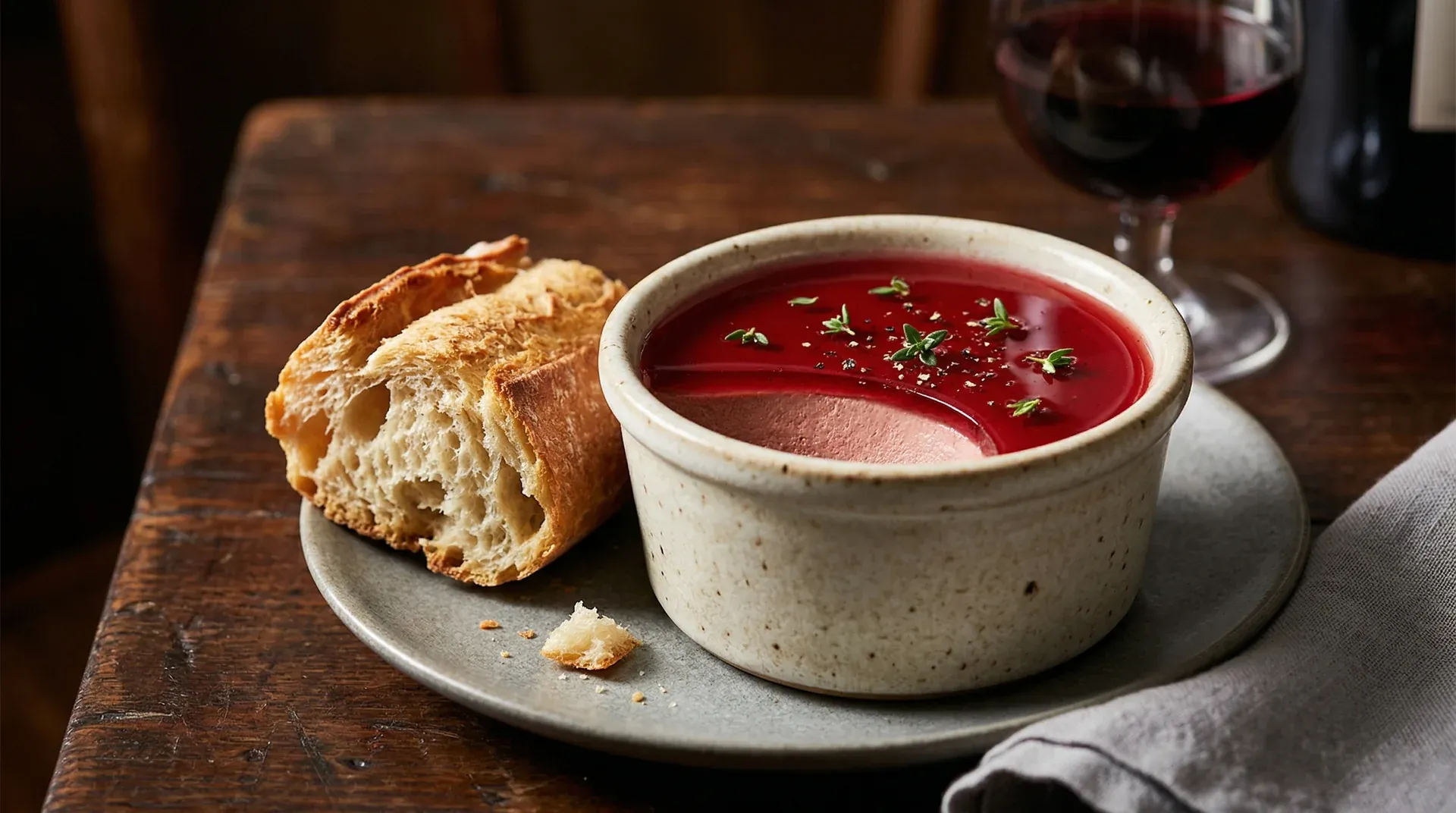
Silky Chicken Liver Mousse (Stovetop Method)
A classic bistro spread achieved through careful pan-roasting and emulsification, requiring no specialized machinery.
Yield: 4–6 Ramekins (500 ml) | Prep: 40 min | Cook: 15 min | Inactive: 4–12 hr | Total: ~5 hr
Headnote
The difference between a gritty pâté and a silky mousse is the coagulation of protein. In this stovetop method, we sauté the livers quickly to develop flavor (Maillard reaction) but remove them before the proteins fully tighten. We then create a stable fat-in-water emulsion by blending the warm protein with butter. Teaching Idea: Carryover Cooking. Meat continues to cook after it leaves the pan as heat equalizes from the surface to the center. To achieve a smooth texture, you must remove the livers when they are still quite pink inside (approx. 140°F/60°C); the residual heat will finish the job safely as they rest.
Ingredients
The Aromatics
- 50 g (¼ cup) Shallots, minced
- 1 Clove Garlic, sliced thinly
- 30 g (2 tbsp) Unsalted Butter (for sautéing)
- 60 ml (¼ cup) Cognac or Brandy
- 2 g (2 sprigs) Fresh Thyme, leaves only
The Forcemeat
- 450 g (1 lb) Chicken Livers, cleaned and trimmed
- 225 g (1 cup) Unsalted Butter, room temperature (cubed)
- 60 ml (¼ cup) Heavy Cream
- 8 g (1½ tsp) Diamond Crystal Kosher Salt
- 2 g (½ tsp) Pink Curing Salt #1 (Optional, preserves pink color)
- 1 g (¼ tsp) Black Pepper, freshly ground
The Port Gelée
- 120 ml (½ cup) Ruby Port Wine
- 30 g (2 tbsp) Sugar
- 3 g (1 tsp) Powdered Gelatin (bloomed in 1 tbsp water)
Mise en Place (Action Checklist)
- Clean the Livers: Inspect livers individually. Use kitchen shears to trim away any white connective tissue (sinew) or green bile stains (which are incredibly bitter).
- Temper the Butter: Cut butter into cubes and leave at room temperature. It needs to be soft, not melted.
- Bloom the Gelatin: Sprinkle gelatin over cold water (for the gelée) and let it hydrate for 5 minutes.
- Prepare the Blender: Have your blender set up and ready; the emulsion must happen while the livers are warm.
Method
Phase 1: The Sauté
In a large skillet, melt the 30 g butter over medium-high heat until foaming. Add the cleaned livers in a single layer. Do not overcrowd the pan (sear in batches if necessary). Sear for 2 minutes on the first side until browned. Flip and sear for 1 minute on the second side.
Sensory Cue: The livers should feel firm on the outside but squishy (like a rare steak) in the center. Add the shallots, garlic, and thyme. Cook for 1 minute until fragrant.
Phase 2: The Deglaze
Pour in the Cognac. CAUTION: The alcohol may flame if using a gas burner. Simmer rapidly until the liquid has reduced by half and the livers are just cooked through but still pink in the center.
Why: Reducing the liquid concentrates the flavor and burns off the harsh alcohol notes. Remove from heat immediately. Let the pan sit for 2 minutes to allow carryover cooking to equalize the temperature.
Phase 3: The Emulsion
Transfer the warm liver mixture (and all pan juices) into a blender. Add the heavy cream, salt, pepper, and curing salt (if using). Blend on high until completely liquified and smooth. With the blender running on low, drop in the room temperature butter one cube at a time.
Why: Adding fat slowly creates a stable emulsion, preventing the mixture from breaking (separating into oil and solid).
Phase 4: Refining and Casting
Pass the warm mixture through a fine-mesh sieve (chinois) into a clean bowl.
Why: This removes any missed sinew or thyme stems, guaranteeing a Michelin-standard texture. Pour the mixture into ramekins, leaving ¼ inch of space at the top. Tap ramekins on the counter to release air bubbles. Refrigerate uncovered for 2 hours until the surface is firm to the touch.
Phase 5: The Port Gelée
In a small saucepan, warm the Port wine and sugar until the sugar dissolves. Do not boil. Stir in the bloomed gelatin until fully melted. Let the liquid cool to room temperature (lukewarm).
Critical: If the jelly is too hot, it will melt the fat in the mousse and create a muddy layer. Gently pour a thin layer over the chilled mousse. Return to the fridge for 2 hours to fully set.
Chef’s Notes
- The “Pink” Factor: Home cooks are often scared of pink chicken. In whole muscles, this is a risk. In liver mousse, if you cook it until gray, the texture will be grainy and metallic. The target internal temp is 150°F/65°C.
- Curing Salt: We include Pink Salt #1 (Nitrite) for aesthetics (color retention) and flavor (cured taste), but it also acts as a safety hurdle against bacteria. It is optional but recommended.
- Serving: Allow the mousse to stand at room temperature for 15 minutes before serving to soften the butter for better spreadability.
Glossary
- Bloom: The process of hydrating gelatin by suspending it in cold water, allowing it to fully absorb the liquid and swell before being added to a warm mixture.
- Curing Salt #1 (Nitrite): Sodium nitrite added to meat products to inhibit bacterial growth, preserve color, and enhance flavor; used in small quantities for its preservative properties.
- Chinois: A fine-mesh sieve used in pastry and sauce making to strain out solids, resulting in a smooth and refined texture.
- Emulsion: A stable mixture of two immiscible liquids, such as fat and water, created through agitation and often stabilized with a thickening agent like gelatin.
- Maillard Reaction: A chemical reaction between amino acids and reducing sugars that occurs during cooking at high temperatures, producing complex flavors and aromas, and contributing to browning.