Chapter 3 · Garde Manger
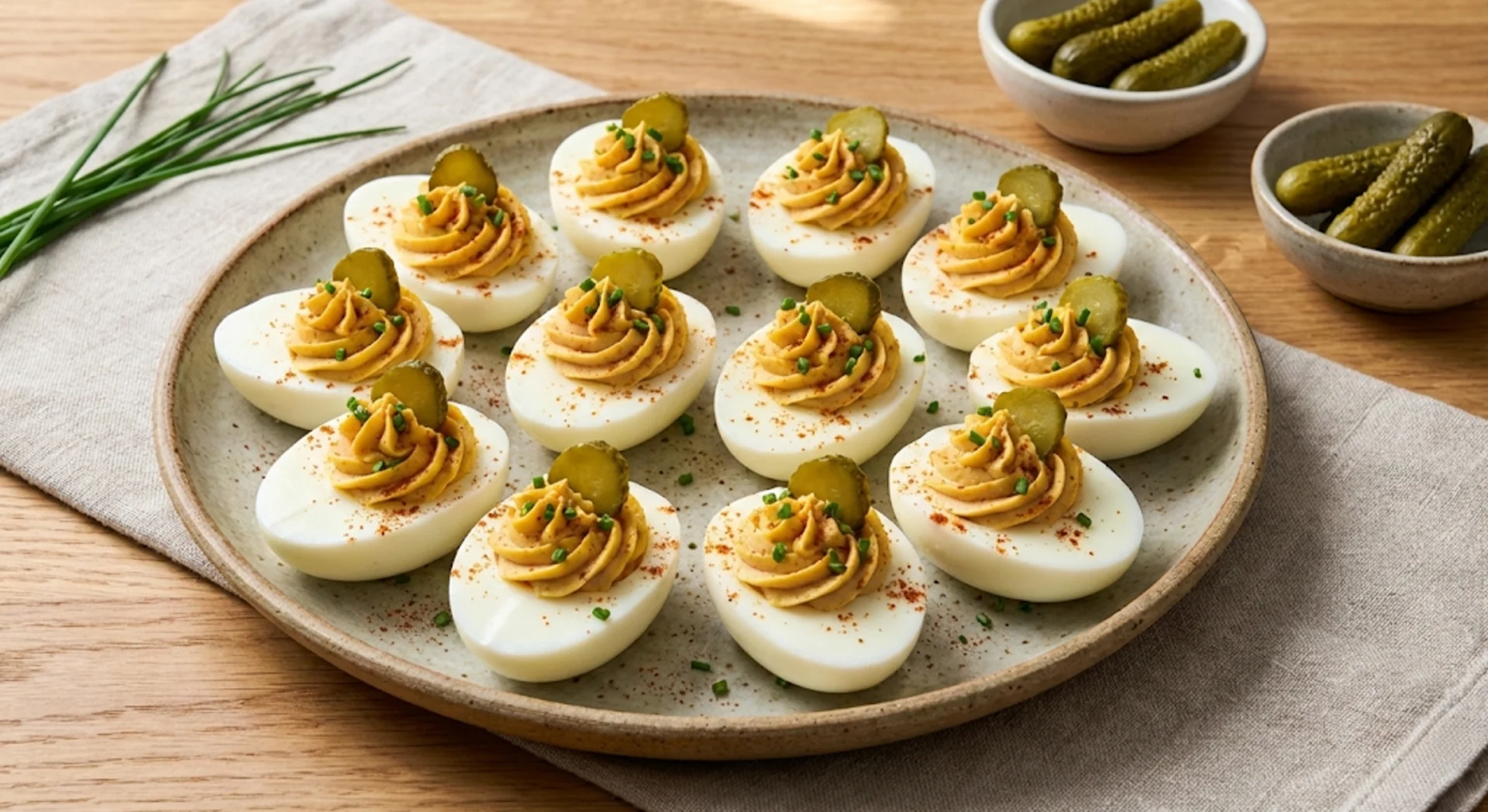
Double Deviled Eggs (Le Jambon)
Smooth, savory yolk mousse fortified with spiced cured ham and brightened with cornichon brine.
Yield: 12 halves | Prep: 20 min | Cook: 12 min | Total: ~35 min
Headnote
By incorporating deviled ham directly into the yolk matrix, we transform a rustic pantry staple into a sophisticated mousse. The high fat content of the yolks and mayonnaise softens the aggressive salinity of the cured ham, while the acid from the pickles cuts through the richness. Teaching Idea: Salt Management via Ingredients. In this recipe, the ham acts as the primary seasoning agent. We rely on the cured meat’s existing salt content rather than adding raw salt, ensuring equilibrium without overpowering the palate.
Ingredients
The Base
- 6 large eggs (older eggs peel easier)
- 5 ml (1 tsp) distilled white vinegar (for the boiling water)
The Emulsion
- 92 g (1 can) deviled ham (3.25 oz standard tin)
- 50 g (3½ tbsp) mayonnaise (see Café Athena — Master Mayonnaise)
- 10 g (2 tsp) Dijon mustard
- 5 ml (1 tsp) cornichon brine or pickle juice
- 1 g (¼ tsp) freshly cracked black pepper
The Finish
- 5 g (1 tbsp) fresh chives, minced
- 2 g (½ tsp) smoked paprika (for dusting)
- 12 cornichon slices (optional, for garnish)
Mise en Place (Action Checklist)
- Prepare the ice bath: Fill a medium bowl with 50% ice and 50% water.
- Sieve the ham: Pass the deviled ham through a fine-mesh sieve or mash thoroughly with a fork until perfectly smooth.
- Mince the garnish: Finely slice chives for the finish.
Method
Phase 1: The Hard Boil
Bring a large pot of water to a rolling boil. Add the vinegar to the boiling water. Gently lower the eggs in with a spider or slotted spoon. Reduce heat slightly to maintain a steady simmer (prevents cracking). Cook for 12 minutes.
Why: A full hard boil ensures the yolk is crumbly and fully set, which makes it easier to break down into a smooth powder for the filling.
Phase 2: Thermal Shock & Extraction
Immediately transfer the eggs to the prepared ice bath. Let stand for 10 minutes until completely cold.
Why: Rapid cooling shrinks the egg slightly inside the shell, detaching the membrane and making peeling significantly easier.
Sensory Cue: The eggs should feel ice-cold all the way through before peeling. Peel the eggs, slice them in half lengthwise, and gently pop the yolks into a mixing bowl. Set the whites aside on a serving platter.
Phase 3: Textural Refinement
Mash the yolks with a fork until they resemble fine yellow sand. Add the sieved deviled ham, mayonnaise, Dijon mustard, cornichon brine, and black pepper. Using a whisk or rubber spatula, whip the mixture vigorously against the side of the bowl until it lightens in color and becomes glossy.
Sensory Cue: The mixture should hold a stiff peak when lifted. If it looks grainy, continue whipping to fully emulsify the fats.
Phase 4: Piping & Assembly
Transfer the mousse into a piping bag fitted with a star tip (or a zip-top bag with the corner snipped). Pipe generous rosettes into the cavity of each egg white. Dust with smoked paprika and sprinkle with fresh chives. Top each with a cornichon slice if desired.
Chef’s Notes
- The Ham Variable: The texture of canned deviled ham can be fibrous. If you do not have a fine-mesh sieve, pulse the ham and mayonnaise together in a small food processor to ensure a silky texture.
- Acidity Adjustment: If the ham tastes particularly fatty or heavy, increase the cornichon brine by 1 tsp to sharpen the flavor profile.
Glossary
- Emulsion: A mixture of two immiscible liquids, stabilized by emulsifiers like lecithin, creating a homogenous mixture.
- Sieve: A kitchen tool with a mesh screen used to strain ingredients, separating solids from liquids and aerating the mixture.
- Thermal Shock: The rapid change in temperature applied to food to halt enzymatic activity and alter texture, as utilized in the egg cooling process.
- Mousse: A light, airy mixture achieved through aeration and stabilization, often incorporating fats and liquids to create a smooth, velvety texture.
- Garde Manger: The French term for the department of a professional kitchen dedicated to preparing cold foods, including appetizers and salads.
- Textural Refinement: The process of altering the physical structure of a food, such as mashing yolks to achieve a specific consistency.
- Peak: A term used in pastry and sauce making to describe the texture achieved when whipping a mixture, characterized by a firm, stable structure.