Chapter 1 · The Lab
Lipid-Based Extraction & Oil Infusion
Type: Fundamental
Chapter: The Lab
Level: Intermediate
Concept Definition
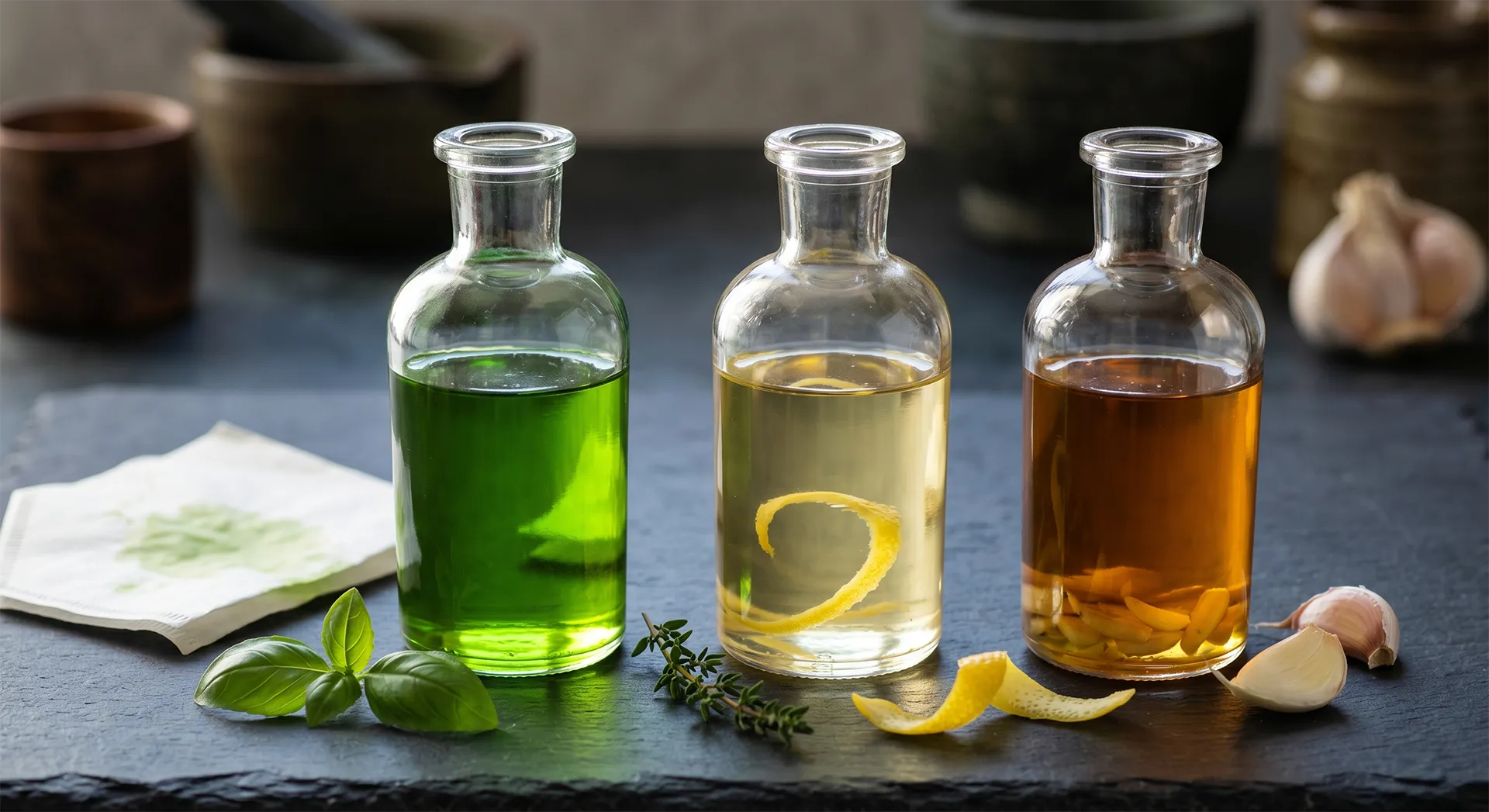
Lipid-based extraction is the process of using fats as a non-polar solvent to capture lipophilic aromatic compounds from herbs, spices, and aromatics. This technique allows a cook to migrate flavor and color from a solid substrate into a liquid medium, creating a concentrated and versatile delivery system.
The Chemistry of Extraction
To control the quality and intensity of an infusion, one must manage the physical relationship between the lipid solvent and the aromatic solute. Four principles govern the migration of flavor compounds into fat and the stability of the resulting oil:
- The Diffusion Gradient: Extraction efficiency is governed by the surface area of the aromatic and the temperature of the oil. Finer cuts increase surface area, while higher temperatures increase molecular kinetic energy, accelerating the migration of essential oils into the fat.
- Chlorophyll Fixation: In herb-based oils, enzymes such as polyphenol oxidase cause rapid browning. Exposure to high heat (blanching) denatures these enzymes and “sets” the chlorophyll, ensuring the oil maintains a vibrant green hue rather than turning muddy brown.
- Lipid Oxidation: Light, heat, and oxygen promote rancidity in unsaturated fats. Proper storage in UV-protected glass at low temperatures is critical to prevent the chemical breakdown that leads to off-flavors.
- Water Activity (a_w): Clostridium botulinum thrives in anaerobic, low-acid, and moist environments — exactly what is created when fresh aromatics are submerged in oil. Reducing water activity through dehydration or acidification is the primary defense against pathogen growth in shelf-stable infusions.
Practical Application — The Temperature/Time Matrix
- Cold Infusion (< 70°F/21°C): Best for delicate, volatile top-notes (e.g., mint, cilantro). Duration: 24–72 hours.
- Warm Infusion (104°F/40°C–140°F/60°C): The standard for “hard” herbs (e.g., rosemary, thyme) and citrus zests. Duration: 2–6 hours.
- Confit Infusion (176°F/80°C–200°F/93°C): Necessary for alliums (garlic, shallots) and dried spices to release sulfurous and toasted compounds. Duration: 1–2 hours.
Practical Application — The Blanch-and-Dry Workflow
- Blanch: Submerge fresh herbs in boiling water for 15 seconds.
- Shock: Immediately transfer to an ice bath to stop enzymatic activity.
- Dry: Squeeze the herbs until bone-dry in a lint-free towel; residual water will cloud the oil and accelerate rancidity.
- Process: Blend with a neutral oil (grapeseed or refined avocado) and filter through a coffee filter or chinois.
Chef’s Note — Solvent Choice
While Extra Virgin Olive Oil is a traditional choice, its high phenolic content can mask the subtle notes of the infused ingredient. For high-fidelity flavor extraction, neutral oils provide a “blank canvas” that allows the aromatic solute to stand alone.
Practice Exercise — The Visual Shift
Goal: Observe the impact of enzyme denaturation on color.
- Setup: Divide 20 g of fresh basil into two piles.
- Action: Mince Pile A raw and add to 100 g of oil. Blanch and dry Pile B, mince, and add to another 100 g of oil.
- Observation: After 24 hours, Pile A will appear dull and olive-drab; Pile B will be a translucent, brilliant emerald green.
- Lesson: Temperature control is as much about color management as it is about flavor.
Glossary
- Anaerobic: An environment or process occurring in the absence of oxygen.
- Enzymatic Browning: A chemical process involving polyphenol oxidase that discolors plant tissues.
- Lipophilic: “Fat-loving”; compounds that dissolve in lipids rather than water.
- Oxidation: A chemical reaction between fats and oxygen leading to rancidity.
- Solvent: The substance (oil) that dissolves a solute to form a solution.
- Water Activity (a_w): A measure of the “free” water available for bacterial growth.