Chapter 1 · The Lab
Hydro-Thermal Stabilization (Blanch & Press)
Technique Preservation & Transformation Technique Folio blanchingshockingpressingpigment fixationchlorophyllanthocyaninsenzyme deactivationhydro-thermalmoisture managementvegetable stabilizationcellular collapsefricoles fonds
Type: Product Geometry & Handling
Chapter: The Lab
Level: Foundation
Concept Definition
In a fat-based cooking matrix like frico, moisture is a structural contaminant. When “wet” inclusions (herbs, cabbage, root vegetables) are introduced to rendering cheese, residual water flashes into steam, creating “blowouts” in the lacing and preventing the protein from cross-linking. Hydro-Thermal Stabilization is the process of setting a vegetable’s color (pigment stabilization) and removing its mechanical water to ensure it integrates seamlessly into a crisp without compromising its integrity.
The Science
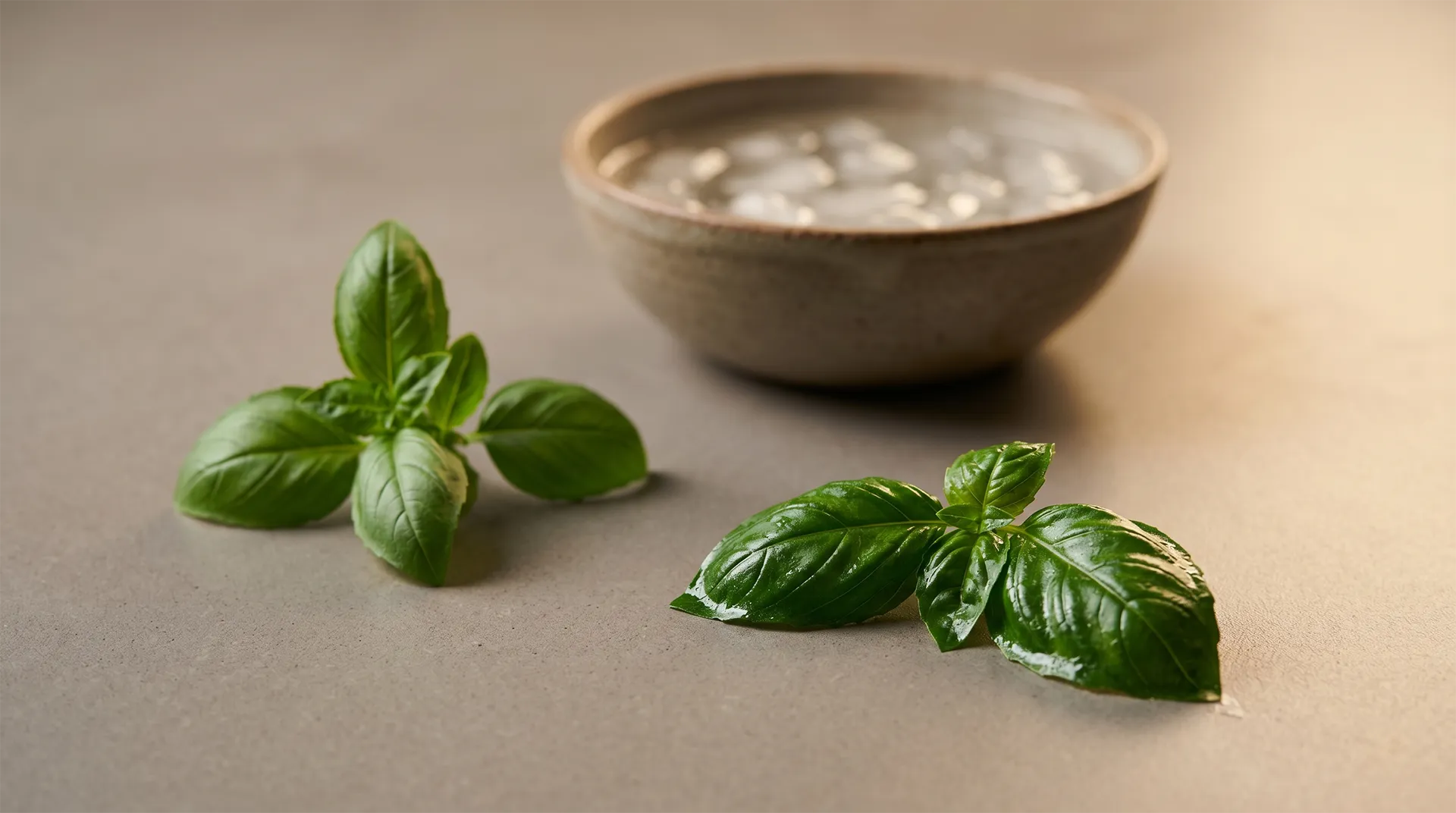
- Enzyme Deactivation: Parboiling (blanching) halts enzymatic activity—such as polyphenol oxidase—that causes rapid browning. This keeps basil vibrant green and purple cabbage deep violet even after exposure to the high heat of rendering fat.
- Cellular Collapse: Heat softens the pectin in cell walls. This allows the vegetable to be “pressed” flat, collapsing the air and water pockets that would otherwise turn to steam and ruin the frico’s snap or cause it to buckle.
- Pigment Fixation: In an acidic or neutral environment, anthocyanins (purple) and chlorophyll (green) are “locked” by the brief heat shock, provided the cooling (shocking) is immediate and aggressive.
Practical Application
- The Flash Blanch: Submerge the inclusion in boiling salted water (for greens) or acidulated water (for purple cabbage/carrots) for 5–15 seconds.
- The Cryo-Shock: Immediate immersion in an ice-water bath. This stops the “carry-over” cooking that would turn the inclusion mushy and dull the color.
- The Mechanical Press: Lay the inclusions between two lint-free towels or heavy-duty paper towels. Apply a flat weight (like a sheet pan with a heavy pot on top) for at least 30 minutes.
- Bone-Dry Inspection: The inclusion must feel like “pliable paper”—dry to the touch but flexible enough to laminate without breaking.
Mistakes + Fixes
- Dull Color: Usually caused by late shocking. Ensure the ice bath is ready before the blanching starts.
- Soggy Matrix: The inclusion was not pressed long enough. If the towel feels damp, keep pressing or replace the towel and continue.
Reference Values
| Ingredient | Blanch Time | Press Time | Target State |
|---|---|---|---|
| Soft Herbs | 5 seconds | 20 minutes | ”Pressed Flower” translucency |
| Cabbage/Alliums | 10 seconds | 30 minutes | Flat, vibrant, non-bleeding ribbons |
| Root Veg (Carrot) | 15 seconds | 45 minutes | Translucent, flexible geometric tiles |
Safety & Constraints
- Steam Hazard: If the vegetable is not bone-dry, it will sputter violently when placed in the hot cheese fat.
- Fragility: Once stabilized and pressed, inclusions are extremely thin and prone to tearing. Handle with tweezers or a small offset spatula.
Applications & Links
- Example Recipes: 12-15 Café Athena - Frico Laminé (Baked Cheese Tiles & Vessels)
- Related Folios: 01-02 Technique Folio - Salinity & Equilibrium; 01-13 Technique Folio - Thermal Gradient Control
Glossary
- Anthocyanins: Water-soluble pigments responsible for red, purple, and blue colors in plants (e.g., purple cabbage). Heat-stable in acidic or neutral environments when shocked immediately.
- Blanching: Brief immersion of a food item in boiling water to halt enzymatic activity, set color, and begin cellular softening.
- Cellular Collapse: The softening and compression of plant cell walls due to heat, eliminating air and water pockets that would otherwise compromise a fat-based matrix.
- Chlorophyll: The green pigment in plant cells. Heat-stable at brief exposures when immediately shocked; degrades to olive-drab under sustained heat.
- Cryo-Shock: Immediate immersion of a blanched ingredient in an ice-water bath to halt carry-over cooking and lock in color.
- Enzyme Deactivation: The halting of enzymatic activity (e.g., polyphenol oxidase) through heat, preventing oxidative browning.
- Hydro-Thermal Stabilization: The combined use of heat (blanching) and mechanical pressure (pressing) to remove moisture and fix pigment in vegetable inclusions before introducing them to a fat-based cooking matrix.
- Parboiling: Partial cooking in boiling water — used here at very brief durations (5–15 seconds) for pigment fixation and cellular softening.
- Pectin: A structural carbohydrate in plant cell walls. Heat softens pectin, allowing the cell walls to be compressed and moisture expelled under pressure.
- Pigment Fixation: The stabilization of natural plant pigments (chlorophyll, anthocyanins) through controlled heat and rapid cooling, preserving visual vibrancy in finished preparations.
- Polyphenol Oxidase: An enzyme that catalyzes browning when plant cells are damaged or exposed to air. Deactivated by heat during blanching.